Trying to Understand Clothing Folds
An idea for drawing folds suddenly came to me while watching a gesture drawing video, so I gathered some references. After looking through several more gesture drawings, I found that folds seem to vary between fabrics and that this idea cannot be applied to everything, but it still makes a useful reference.
On this page
A Cloth and a Sphere
Section titled “A Cloth and a Sphere”Imagine a sphere and a flat piece of cloth here. The sphere is extremely sphere-like, and the cloth is extremely cloth-like.
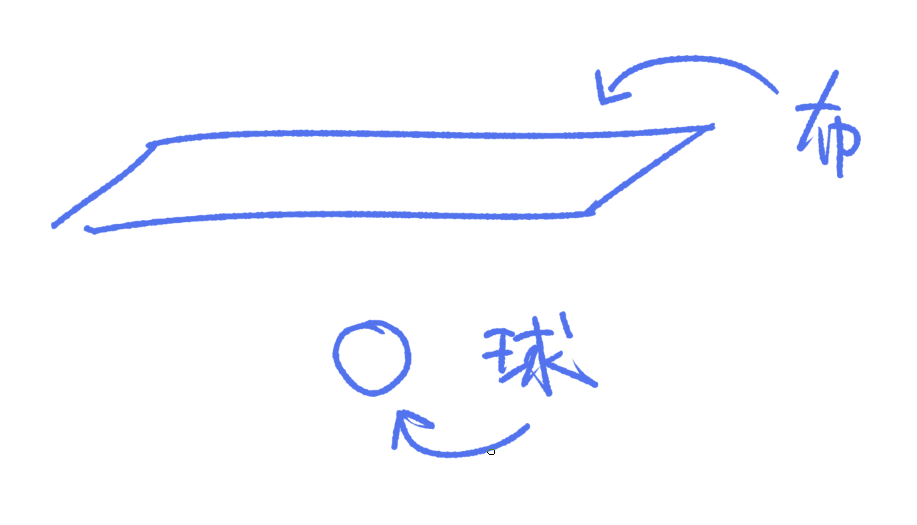
Next, let the cloth fall onto the sphere. The sphere props it up while gravity pulls it downward.
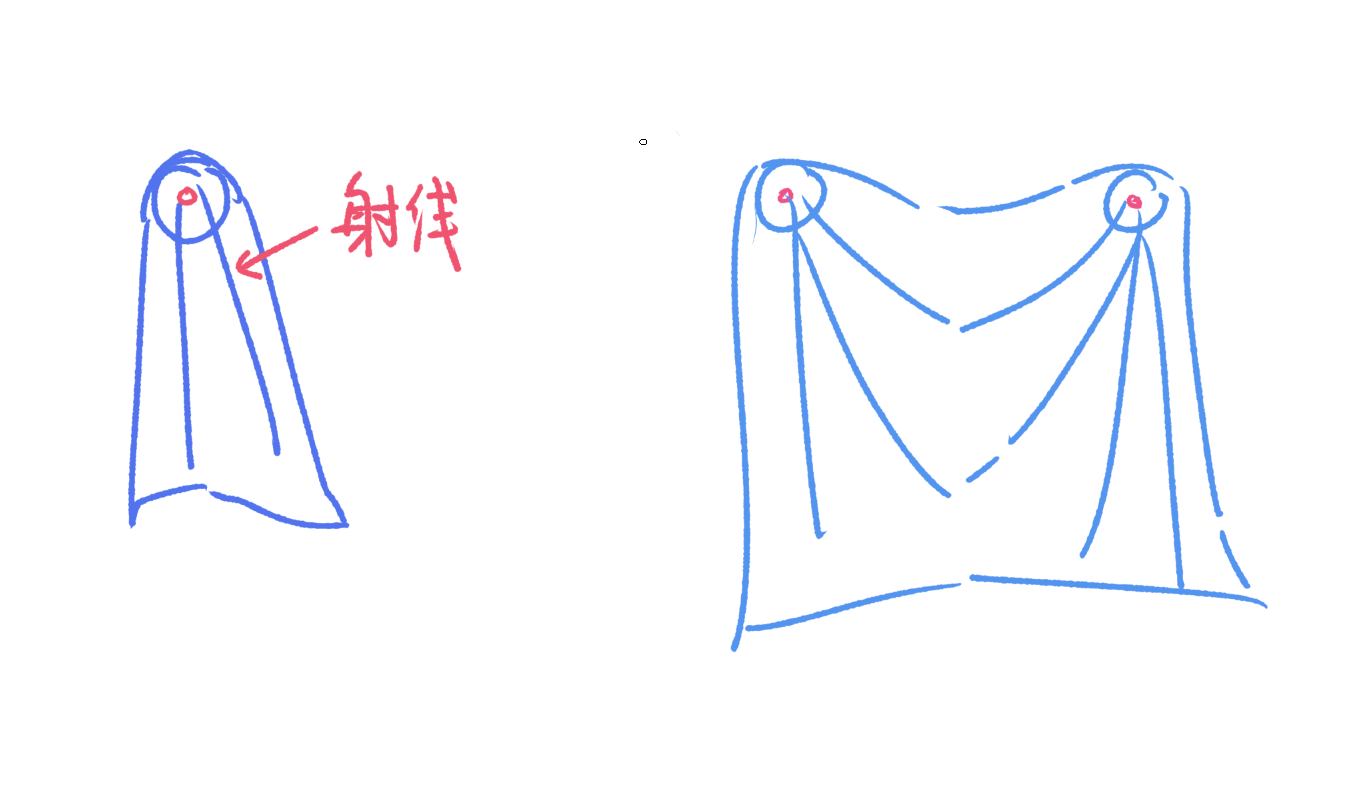
The sphere can be treated as a support point for the fabric. The fabric can no longer move straight down, so it hangs outward from around that point and forms a group of folds radiating away from it.
Looking only at their direction, the folds resemble rays coming from a single point. If the cloth is fixed at two points, there are two groups of rays. Those two groups also happen to form several arcs, while the rest hangs naturally.
Next, Analyzing a Gesture Drawing Reference
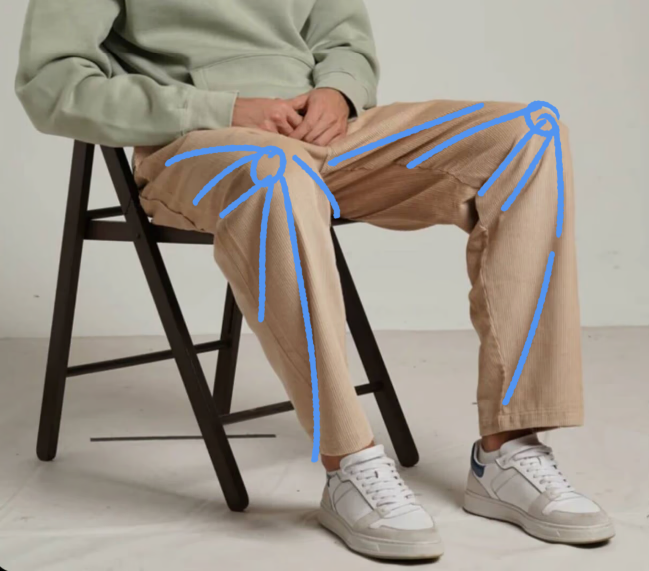
Section titled “Next, Analyzing a Gesture Drawing Reference”I deliberately found an outfit with clearly visible folds. In the photo below, the person is sitting, so the trousers bend around the knees while the hoodie is compressed and pulled around the elbows and waist.

Treat the knees as those spheres. Several folds on the thighs and lower legs start near the knees and extend toward the hips and trouser hems. At the same time, the pull from the hips makes the upper folds look very straight.
Compression of Excess Fabric
Section titled “Compression of Excess Fabric”There is another kind of fold that cannot be explained by “pulling.” Sitting shortens the front of the body, but the fabric covering the torso does not disappear. The excess fabric is compressed vertically, creating curved, intersecting folds.
The folds on the hoodie sleeves work the same way (I like this).
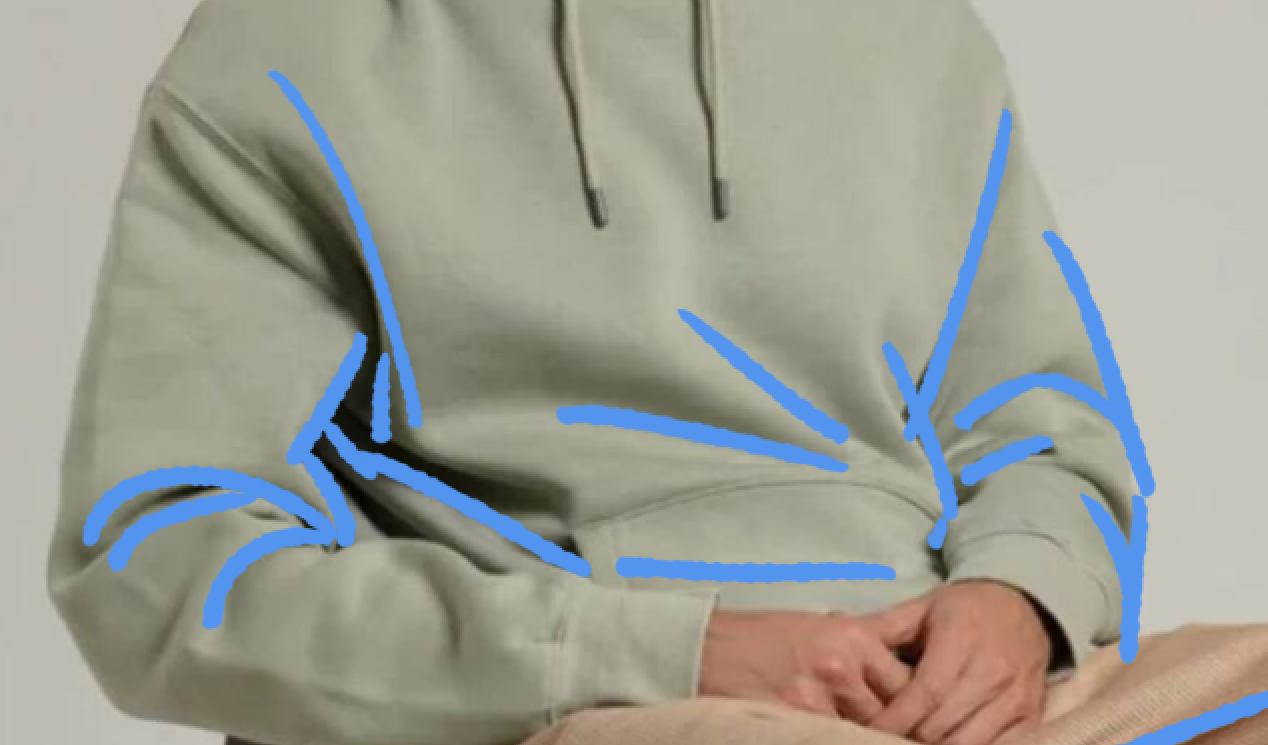
I now completely understand the radiating folds around support points! (Do I really?) I still do not fully understand compressed folds or how different materials affect them, but now I know this much:
When fabric is held by something, find the support point (a sphere or a line), then draw folds that radiate outward
When two body parts move closer together, show the fabric gathered between them with shorter, denser zigzag lines
However, the legendary “shadows,” which are extremely relevant to this lesson, remain a field I know absolutely nothing about. What a thought…